Updated 2026-10-29 · Editorial archive: 2026-10-29. Archive grouping is separate from publication.
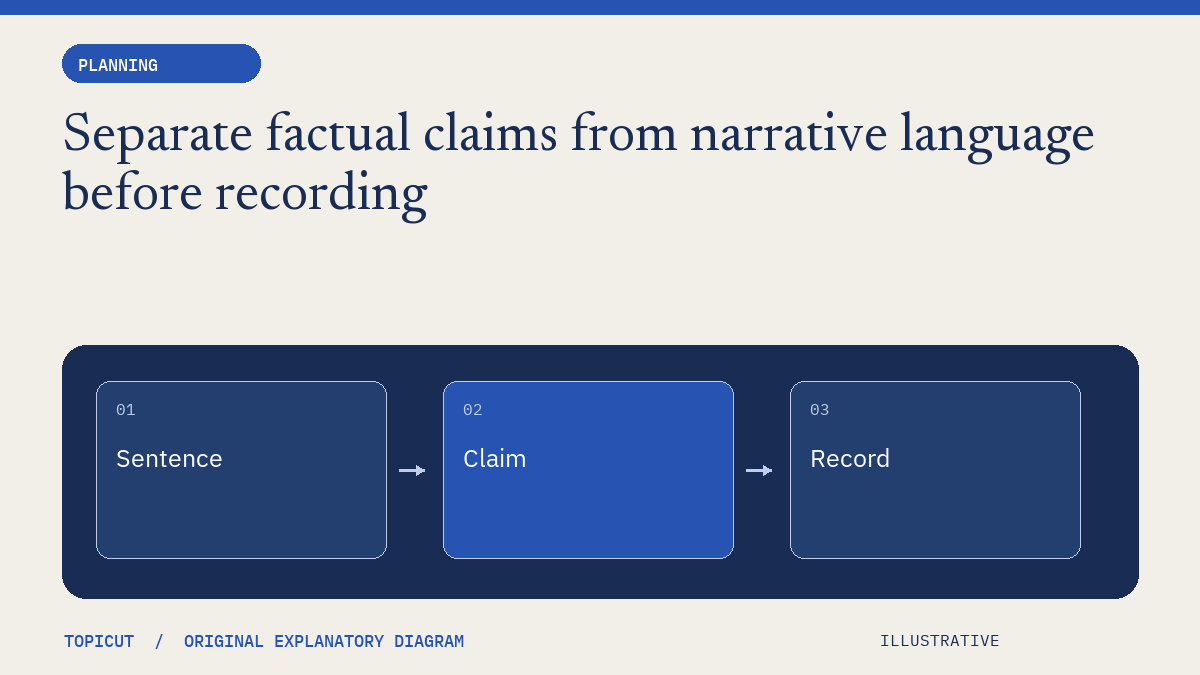
Separate factual claims from narrative language before recording
A script mixes facts, interpretation and connective language.
A script mixes facts, interpretation and connective language. Reviewing every sentence as if it were the same kind of assertion makes errors harder to find. Mark what can be checked, what is an inference and what is simply a transition.
Make the decision explicit
Extract dates, quantities, identities, causal statements and quotations into a claim ledger. Attach a precise source location and note disagreements. Label interpretations as interpretations. When rewriting for pace, check whether a qualifier such as approximately, according to or may have disappeared. A smoother sentence can accidentally become a stronger claim.
A worked example
An invented draft says a redesigned component immediately eliminated every failure. A report may actually show that a different test recorded fewer failures over a limited period. Rewrite the narration to describe the measured context and preserve the distinction between sequence and causation. The visual can show the two test conditions instead of a triumphant before-and-after graphic that suggests more than the record supports.
Review before handoff
Before generating final audio, review only the extracted factual claims. Then listen to the narration for emphasis that changes their meaning. Keep the approved text revision with the source ledger. A citation collection is useful, but its presence alone does not prove that each assertion is supported or that the final spoken version still matches the reviewed text.
Put the idea to work
Read claim ledger and use the related free workflow tool for its stated, limited task. Neither link replaces the review described above.
Reference and editorial notes
References checked October 29, 2026. Numerical and fictional scenarios are illustrative unless explicitly identified otherwise. The cover is an original Topicut explanatory diagram, not a product screenshot or a measurement.
Continue: Script planning
- Words to minutes
- Plan a 15-minute video script with an honest timing budget
- Build a documentary outline around questions that can be answered
- Production brief
- Research question
- Documentary thesis
- Estimate script runtime before recording
Working on a specific brief? Request a sample to discuss scope and availability. Self-serve video generation remains closed.
Author

Categories
More Posts
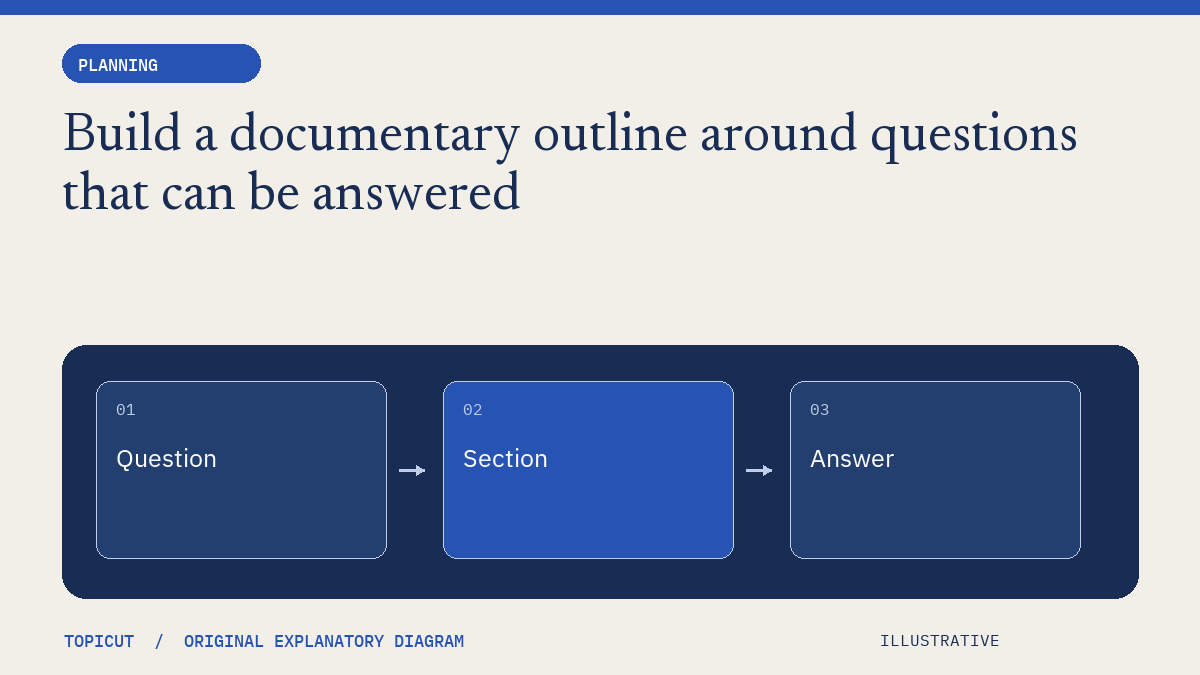
Build a documentary outline around questions that can be answered
A useful outline tells the writer what each section must resolve.
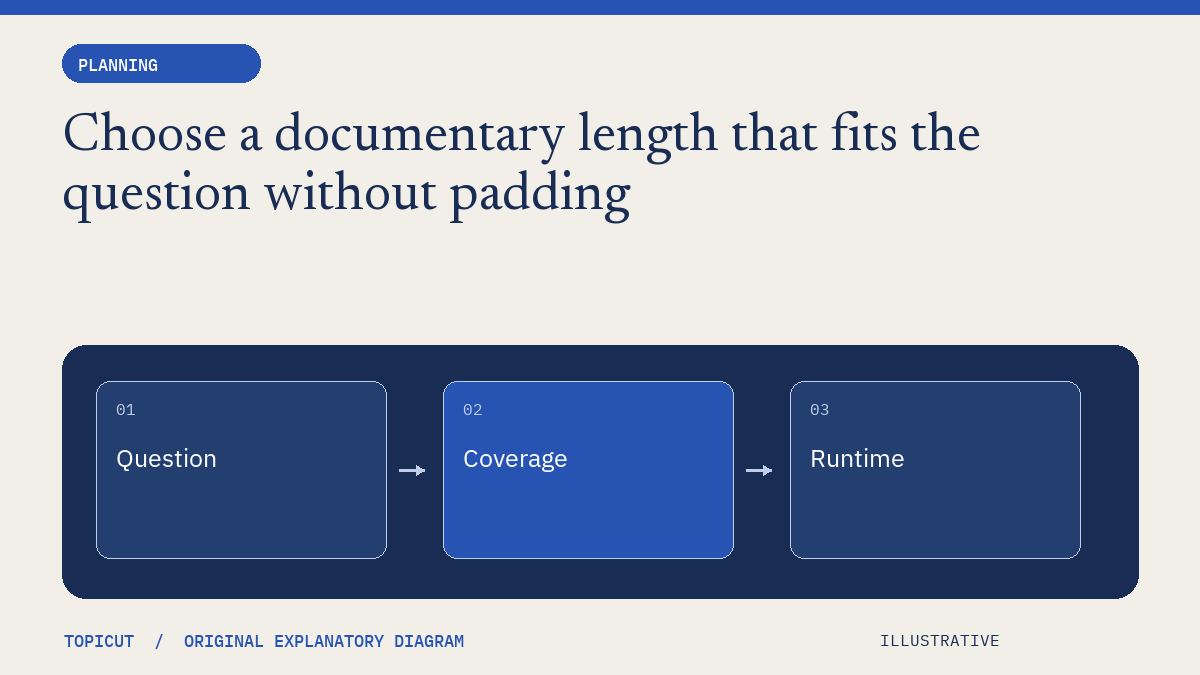
Choose a documentary length that fits the question without padding
Runtime should follow the amount of explanation the question needs.
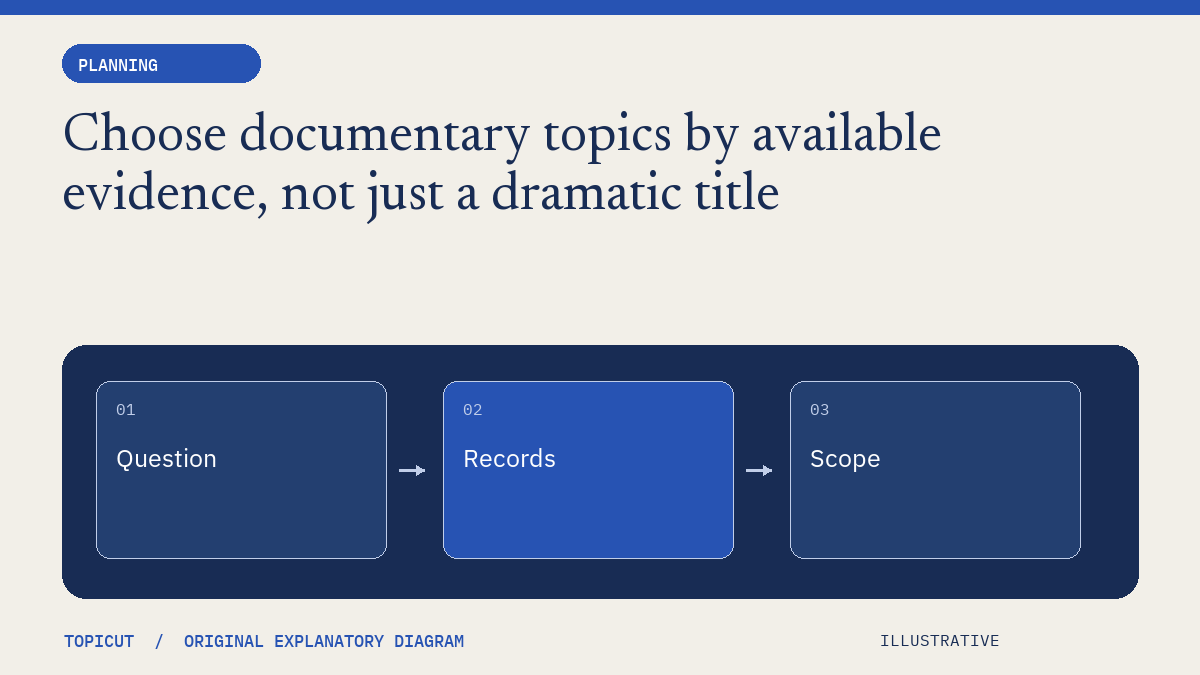
Choose documentary topics by available evidence, not just a dramatic title
A topic can sound compelling and still be expensive to support visually.