Updated 2026-10-29 · Editorial archive: 2026-10-27. Archive grouping is separate from publication.
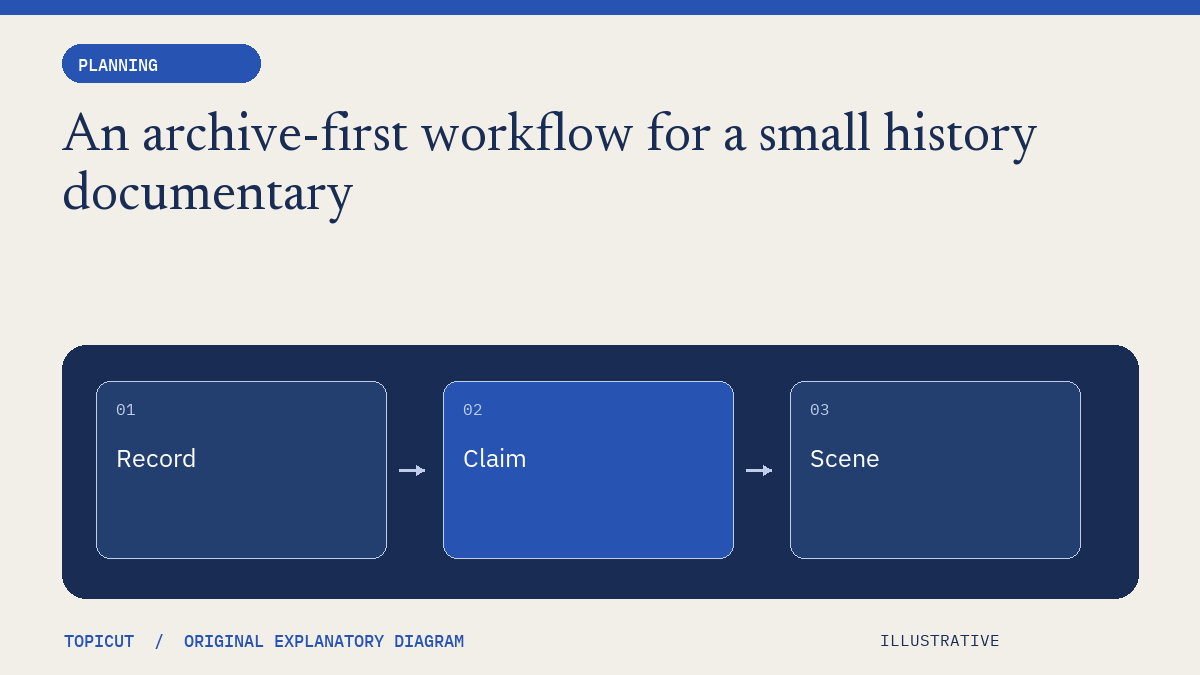
An archive-first workflow for a small history documentary
An archive-first workflow starts with records you can inspect rather than a finished script looking for convenient pictures.
An archive-first workflow starts with records you can inspect rather than a finished script looking for convenient pictures. It can reduce late rewrites when a vivid scene turns out to be undocumented or the only available asset does not fit the intended use.
Make the decision explicit
Build a small source inventory with identifiers, dates, creators and the claims each item might support. Then draft a provisional chronology. Keep separate columns for historical relevance and reuse review. A record can be excellent evidence but unsuitable for your planned publication, while an available image can be usable without proving the claim in the narration.
A worked example
Imagine a short piece on a fictional coastal station. The inventory contains a construction drawing, a later maintenance report and an undated postcard. The drawing helps explain the planned layout; the report supports a later alteration; the postcard is held as an unresolved visual candidate. Write the sequence so these roles remain distinct instead of assigning the postcard a precise date because it looks old.
Review before handoff
Revisit the inventory after each major script change. New wording may require different evidence. Use attribution formatting only after the underlying records have been reviewed, and retain unresolved fields rather than filling them with guesses. This workflow does not certify authenticity or rights; it makes the questions easier to see and resolve.
Put the idea to work
Read primary source and use the related free workflow tool for its stated, limited task. Neither link replaces the review described above.
Reference and editorial notes
References checked October 29, 2026. Numerical and fictional scenarios are illustrative unless explicitly identified otherwise. The cover is an original Topicut explanatory diagram, not a product screenshot or a measurement.
Continue: Script planning
- Words to minutes
- Plan a 15-minute video script with an honest timing budget
- Build a documentary outline around questions that can be answered
- Production brief
- Research question
- Documentary thesis
- Estimate script runtime before recording
Working on a specific brief? Request a sample to discuss scope and availability. Self-serve video generation remains closed.
Author

Categories
More Posts
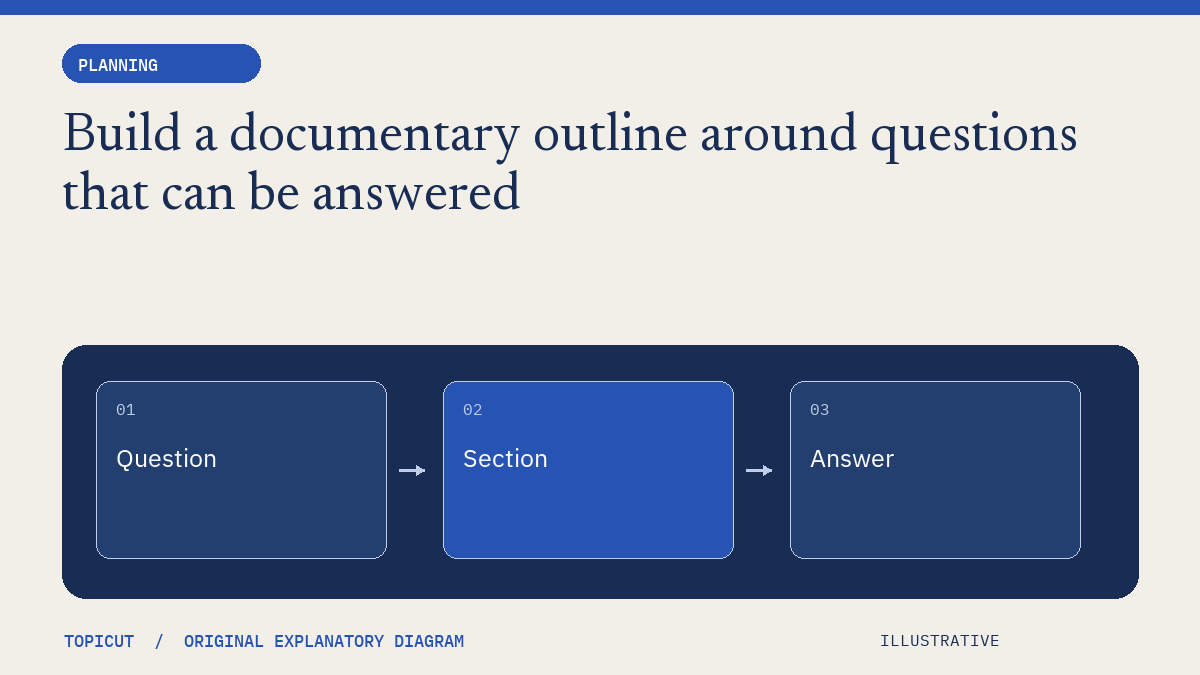
Build a documentary outline around questions that can be answered
A useful outline tells the writer what each section must resolve.
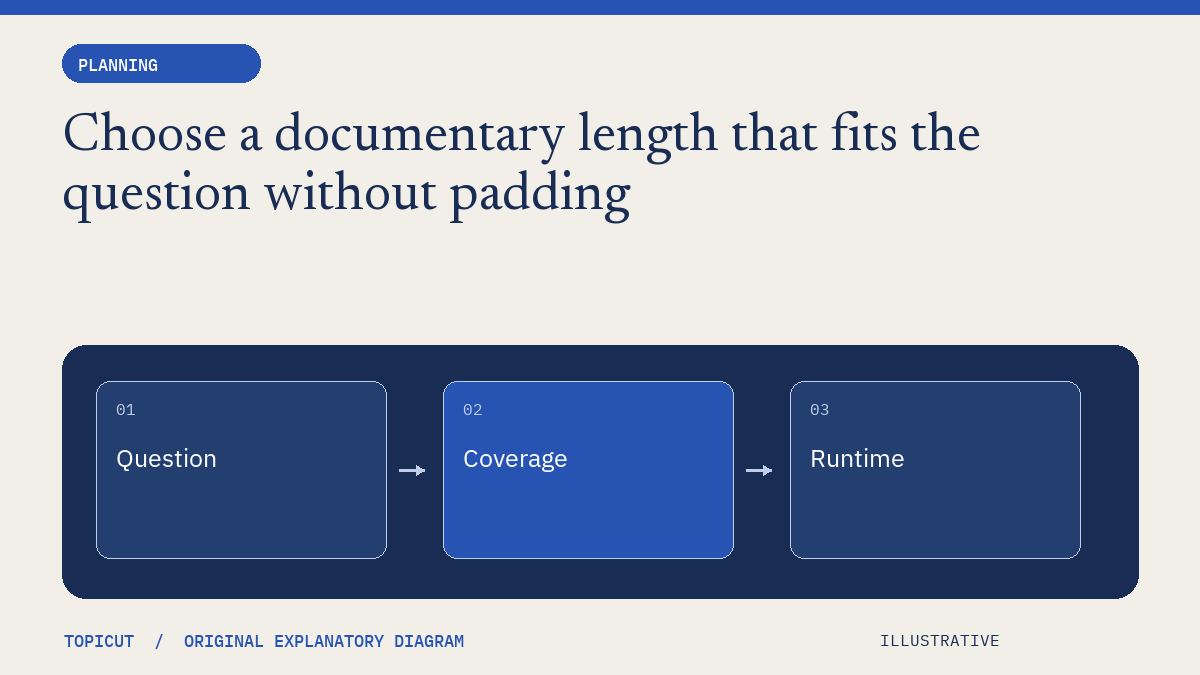
Choose a documentary length that fits the question without padding
Runtime should follow the amount of explanation the question needs.
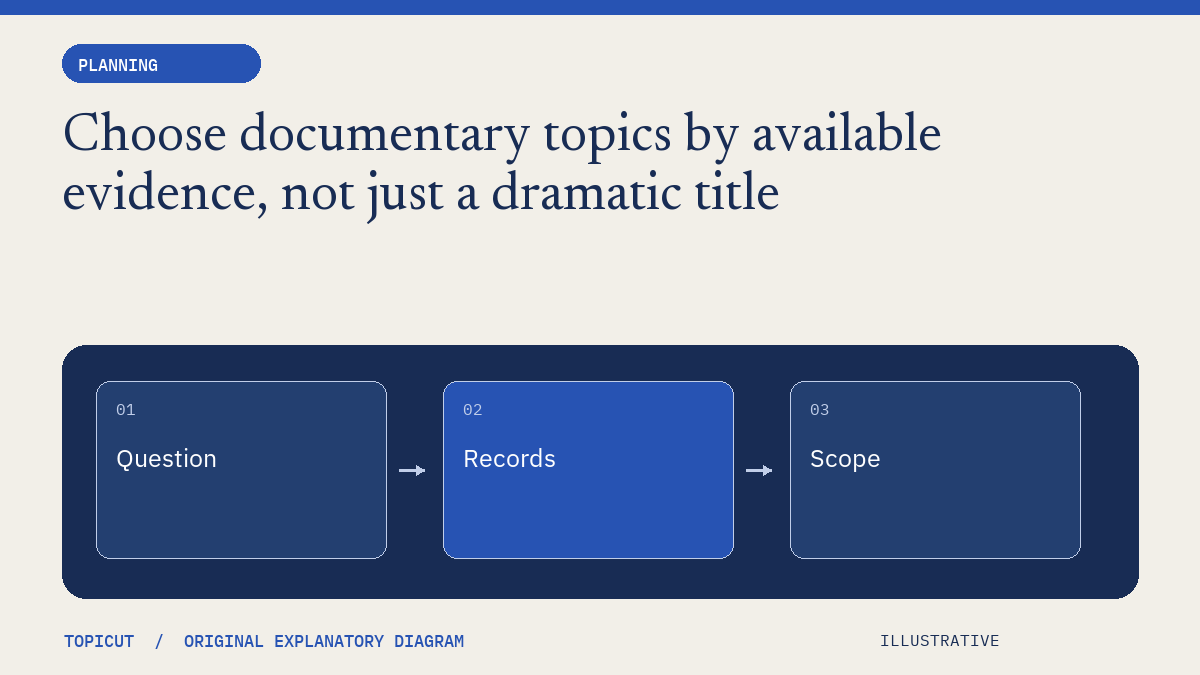
Choose documentary topics by available evidence, not just a dramatic title
A topic can sound compelling and still be expensive to support visually.