Updated 2026-10-29 · Editorial archive: 2026-10-23. Archive grouping is separate from publication.
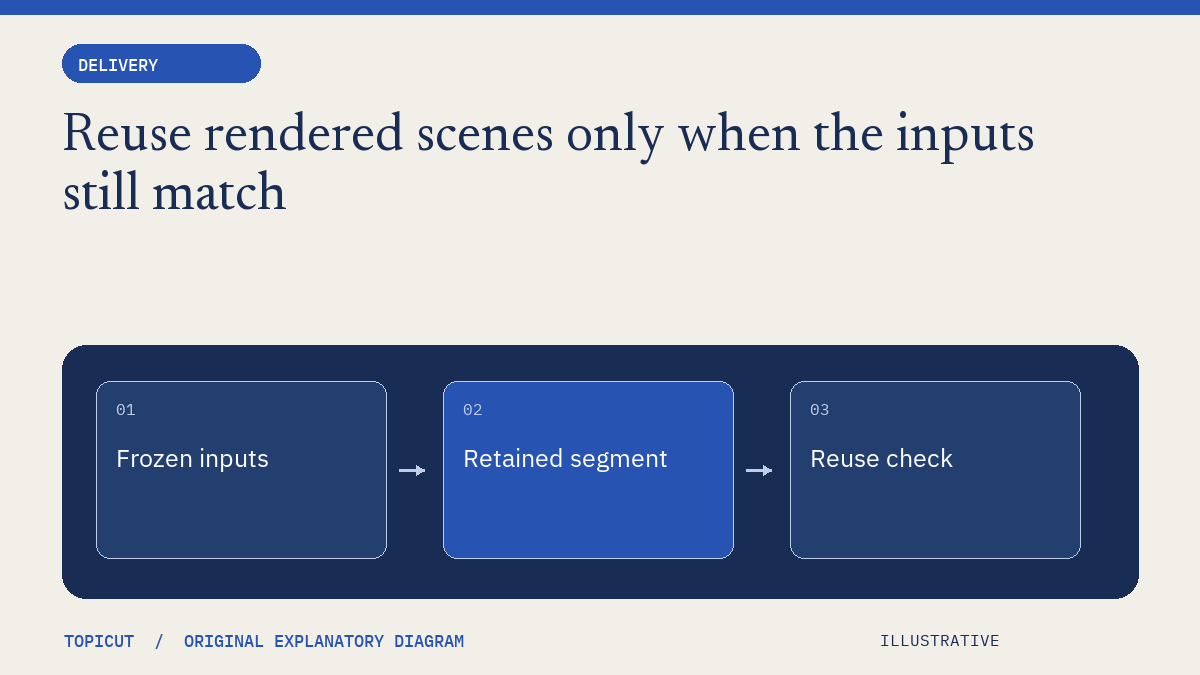
Reuse rendered scenes only when the inputs still match
Reusing accepted segments can reduce repeated work, but a cache hit is valuable only when it refers to the right inputs.
Reusing accepted segments can reduce repeated work, but a cache hit is valuable only when it refers to the right inputs. A file existing at a familiar path does not prove it matches the current narration, image, timing or render settings.
Make the decision explicit
Identify the exact scene input and the settings that affect its output. Retain the relationship with the rendered segment and verify the artifact before reuse. If the script, audio duration, image crop or caption revision changes, decide whether the prior segment remains eligible. Keep uncertain states separate from confirmed reusable results.
A worked example
For an invented scene, a ten-second narration is replaced by a twelve-second recording with the same wording. The earlier visual segment may now end too soon or repeat unexpectedly. A cache key based only on text would miss the difference. Including the actual audio identity and relevant timing makes the invalid reuse visible.
Review before handoff
After assembly, inspect transitions and final duration. Avoid presenting reuse as a guaranteed cost reduction without measuring the full workflow, including storage and validation. Good checkpoints make recovery deliberate; they do not justify skipping editorial review or silently combining pieces from incompatible production versions.
Put the idea to work
Read checkpoint and use the related free workflow tool for its stated, limited task. Neither link replaces the review described above.
Reference and editorial notes
References checked October 29, 2026. Numerical and fictional scenarios are illustrative unless explicitly identified otherwise. The cover is an original Topicut explanatory diagram, not a product screenshot or a measurement.
Continue: YouTube delivery
- YouTube chapter formatter
- YouTube description builder
- Validate the final YouTube chapter, not only the timestamp list
- Write a video description that separates the summary, chapters and sources
- YouTube chapters
- Aspect ratio
- Video bitrate
- Check chapter timing including the last segment
Working on a specific brief? Request a sample to discuss scope and availability. Self-serve video generation remains closed.
Author

Categories
More Posts
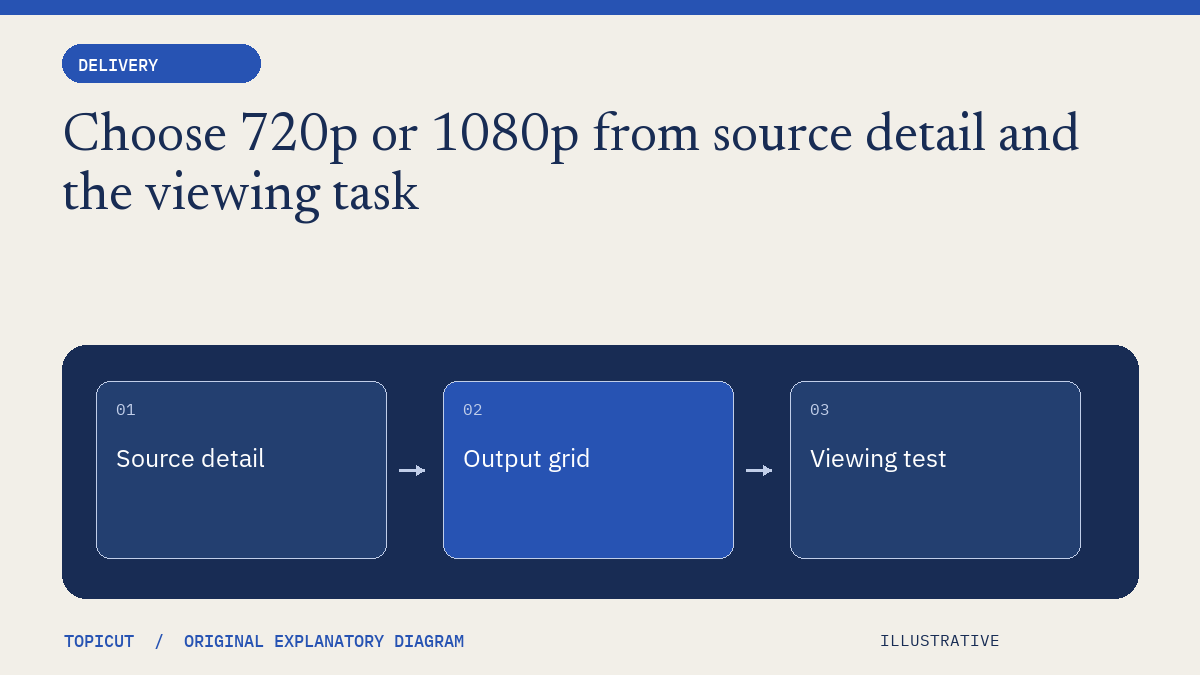
Choose 720p or 1080p from source detail and the viewing task
An export resolution names a pixel grid, not the amount of original detail in the source.
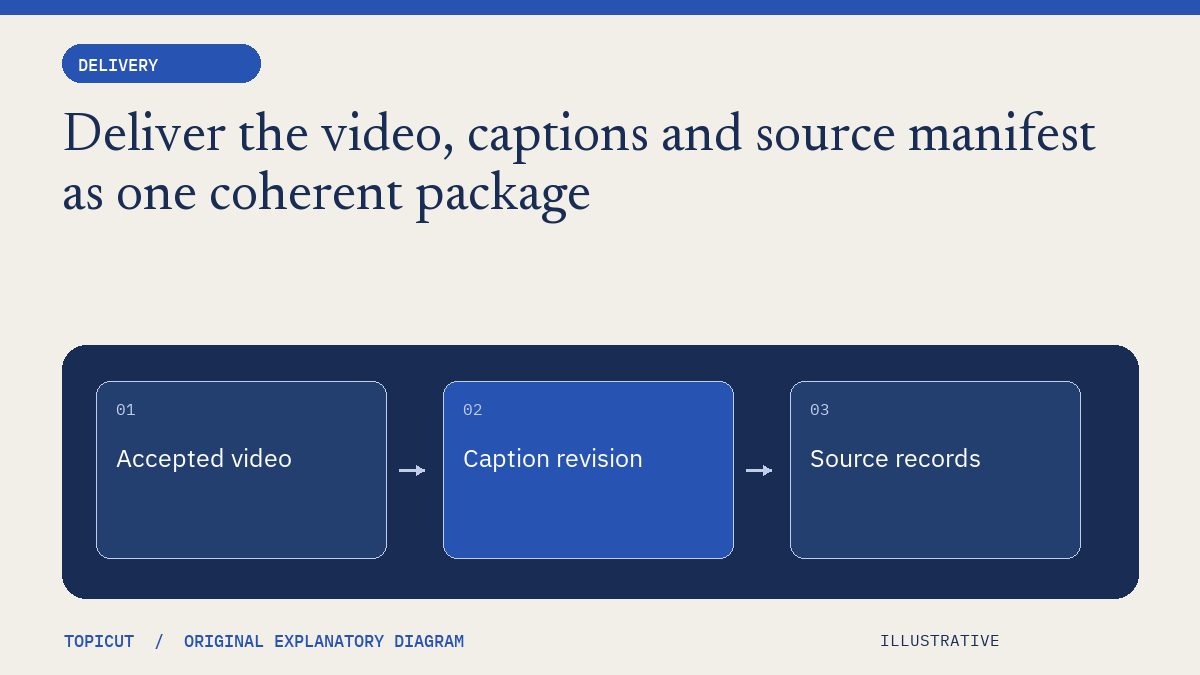
Deliver the video, captions and source manifest as one coherent package
A delivery package should make the relationship between its files easy to understand.
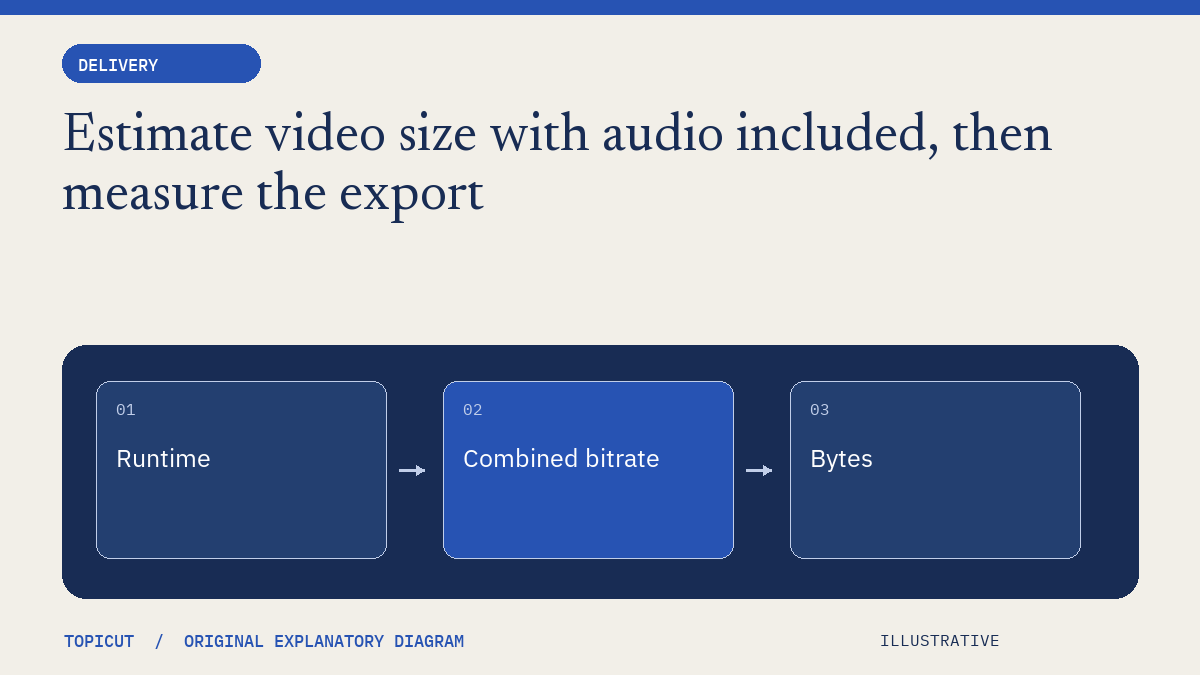
Estimate video size with audio included, then measure the export
A video-size estimate should include both picture and sound and should state whether the units are decimal or binary.